
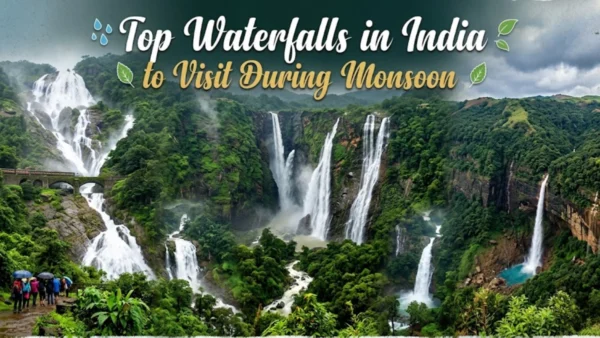
There’s something magical about the monsoon season in India—the dry landscapes turn lush green, the air feels fresh, and hidden streams come alive as powerful waterfalls. What may look like a quiet cliff during summer transforms into a roaring cascade once the rains arrive, making monsoon the best time to witness waterfalls in their full glory.
From the misty hills of Kerala to the dense forests of Karnataka and the rugged terrains of Maharashtra, India is home to some truly breathtaking waterfalls that are at their peak during the rainy season. These destinations not only offer stunning views but also a refreshing escape from city life, making them perfect for weekend trips, nature photography, and peaceful getaways.
In this blog, we’ve curated a list of the top waterfalls in India to visit during monsoon, focusing on beauty, accessibility, and real travel experience. Whether you’re planning a short trip or a scenic adventure, this guide will help you discover the most captivating waterfall destinations that come alive when it rains.
1. Jog Falls, Karnataka — India’s Most Famous Plunging Waterfall
Height: 253 metres (830 feet)
Best time during monsoon: June to September
Location: Shimoga district, Karnataka, Western Ghats
Jog Falls is the tallest un-tiered waterfall and the second-highest plunging waterfall in India. It is made up of four distinct descending streams — Raja, Rani, Roarer, and Rocket, all originating from the Sharavathi River. In the dry season, the water flow is modest. During monsoon, all four streams merge into a roaring curtain of white water falling 253 metres straight down — genuinely one of the most dramatic sights in Indian nature.
Karnataka Tourism maintains a clean, shaded parking zone at Jog Falls, with free entry. From the car park, you can take two viewpoints — the Watkins viewpoint at the top for a panoramic view, or descend 1,400 steps to the platform at the base for a close-up view of the falls. The mist is intense during peak monsoon and the steps can be slippery, so grip shoes are essential.
During monsoon, the dense fog might impair visibility at times. It is advisable to visit early in the morning when the mist is not as dense.
Nearest town: Shimoga (100 km). Nearest airport: Hubli (170 km). The falls are well-connected by state highway from both Shimoga and Uttara Kannada.
2. Nohkalikai Falls, Meghalaya — India’s Tallest Plunge Waterfall
Height: 340 metres (1,115 feet)
Best time during monsoon: June to September (full force); October to November (clearer views)
Location: Near Cherrapunji, East Khasi Hills, Meghalaya
Nohkalikai Falls is India’s tallest plunge waterfall, dropping 340 metres off a sheer cliff into a turquoise pool below. The name comes from a tragic local legend about a woman named Ka Likai. Cherrapunji — one of the wettest places on Earth — ensures that this waterfall stays powerful well beyond the monsoon season, but June to September is when it is at its most overwhelming.
During monsoon season, the waterfall becomes extremely powerful and the entire valley turns lush green. The cool breeze, misty surroundings, and wide open hill views create a peaceful yet thrilling atmosphere.
One important note: visibility can be very low during peak monsoon due to heavy rainfall and mist, and visitors may face difficulties in reaching the waterfall clearly. Landslides and roadblocks on the approach road are also a possibility. If you want dramatic volume but are flexible about clear photography, visit in June or July. If you want both power and visibility, October to November is a sweet spot.
Timings are 8:00 AM to 5:00 PM daily. Entry fee is approximately ₹50 per person, with parking fees additional.
How to reach: Nohkalikai Falls is about 55 km from Shillong and can be reached via a 2-hour drive through scenic roads. Taxis and local tours are available from Shillong to Cherrapunji. Nearest airport is Guwahati (165 km), which has better flight connectivity than Shillong’s Umroi airport.
3. Dudhsagar Falls, Goa–Karnataka Border — The Sea of Milk
Height: 310 to 320 metres (1,017 feet)
Best time: October to May (official access); Monsoon viewing is possible but access is restricted
Location: Bhagwan Mahaveer Wildlife Sanctuary, Goa–Karnataka border
Dudhsagar Falls, or “Sea of Milk,” is one of India’s strongest waterfalls, dropping 310 metres. It appears particularly stunning during monsoon when the Mandovi River overflows, producing a thundering waterfall in the green forests. The name is apt — during peak flow, the water appears brilliant white as it cascades over dark rock, resembling a river of milk.
However, Dudhsagar is the most important waterfall in this list to understand from a safety and access perspective. The Government of Goa suspended all vehicular jeep safaris from June 10, 2025. The railway track route — which became popular on social media — is illegal trespassing on active railway property and has resulted in at least 14 fatalities. Do not attempt it regardless of what you read online.
The official forest trek costs approximately ₹1,000 per person, including the mandatory booking fee of ₹527 plus GST, guide charges, and forest entry fees. Access via the Collem forest gate is only permitted from 7:30 AM to 11:00 AM daily during the monsoon. Swimming at the falls is strictly prohibited during monsoon due to dangerous currents.
In short: Dudhsagar is best visited from October to January when jeep safaris are operational, access is easier, and the falls are still impressively full. If you go during monsoon, use only the official trekking route booked through the GTDC portal.
4. Athirappilly Falls, Kerala — The Niagara of South India
Height: 24 metres (80 feet) tall, 91 metres (330 feet) wide
Best time during monsoon: June to September for maximum flow; October to February for best overall experience
Location: Thrissur district, Kerala
Athirappilly Falls, Kerala’s highest waterfall, measures 80 feet in height and 330 feet in width. The view of water cascading over rocky cliffs into the Chalakudy River is inspiring, particularly during monsoon. Its sheer width is what makes it dramatic — during the monsoon, it resembles a miniature Niagara, with dense tropical forest on all sides and elephant country just beyond.
Access close to the waterfall base may be restricted during monsoon. Bathing is generally restricted near the main waterfall due to strong currents and safety concerns. Most visitors see the falls from the viewpoint at the top, which gives an excellent panoramic angle. A second viewpoint at the base requires a steeper descent and is more exciting but gets slippery in heavy rain.
Most travellers spend about 2 to 4 hours at Athirappilly Waterfalls, which allows time to see the top viewpoint, walk down to the base viewpoint, take photos, and explore nearby attractions like Vazhachal Falls. Timings are approximately 8:00 AM to 5:30 PM. Parking is available at a large government-run complex with a shuttle bus from the lot to the entry gate.
How to reach: Nearest major city is Thrissur (61 km). Nearest airport is Cochin International Airport (55 km), making this one of the most accessible major waterfalls in India.
5. Chitrakote Falls, Chhattisgarh — India’s Widest Waterfall
Height: 29 metres (90 feet tall), approximately 300 metres wide during monsoon
Best time: July to October
Location: 38 km from Jagdalpur, Bastar district, Chhattisgarh
Chitrakote is India’s answer to Niagara Falls in terms of sheer width. Chitrakote Waterfalls is the widest waterfall in India, formed by the Indravati River, standing at a height of 90 feet. During the rainy season, the water appears reddish due to the sediment, while in the summer moonlight, it turns a glowing white. This seasonal colour shift is something genuinely unique and worth planning your visit around.
The best time to enjoy here is between June and October, wherein you can witness the grandeur of water turning forceful as the monsoon approaches. During peak monsoon, the width can expand dramatically as the Indravati floods, creating a horseshoe arc of water that fills your entire field of vision.
The falls are surrounded by dense forest and the Vindhya Mountain Range. Visitors can reach the falls with a short trek. Chitrakot Waterfalls is a popular picnic spot that creates a breathtaking view that attracts many tourists. Access is relatively easy compared to many remote falls — the main viewpoint is a short walk from the parking area.
How to reach: Jagdalpur is the nearest major town (38 km), well connected by train and road from Raipur (273 km). Raipur has the nearest airport with good domestic connectivity.
6. Thoseghar Falls, Maharashtra — Hidden Gem of the Western Ghats
Height: Up to 200 metres
Best time: July to November
Location: 20 km from Satara, Maharashtra
Thoseghar Waterfalls is located near the small village of Thoseghar at the edge of the Konkan region. This massive waterfall is about 200 meters in height, with a series of small streams, featuring dense woods and a clean lake in a hilly landscape.
It is not as famous as Jog Falls or Dudhsagar, which works in your favour. The crowds are smaller, the forest feels more pristine, and the surroundings are genuinely beautiful. The area provides a picnic area and a newly constructed platform for picturesque views of the waterfall, though entering the valley is banned for safety concerns. Thoseghar draws visitors mainly between July and November when the cascading water becomes more voluminous due to heavy rainfall.
This is a particularly good choice if you are travelling from Pune or Mumbai and want a lesser-known monsoon waterfall experience within a day’s drive. Satara is approximately 260 km from Mumbai and 110 km from Pune by road.
7. Tiger Falls, Uttarakhand — Monsoon in the Himalayas
Height: 95 metres (312 feet)
Best time: July to September
Location: 20 km from Chakrata, Dehradun district, Uttarakhand
Tiger Falls stands tall at 312 feet with all its glory. It remains untouched by modernisation and is like a peaceful retreat surrounded by nature. It is about 20 kilometres from Chakrata and you can reach it by trekking on a route that goes through the jungle. There are two routes to Tiger Falls — one is a shorter, convenient path of 1 kilometre, and the other is a slightly more challenging 5-kilometre adventurous trek.
Most Himalayan waterfalls are at their best during and just after the monsoon, when snowmelt and rainfall combine. Tiger Falls is one of the few direct (single-drop) tall waterfalls in the Himalayan belt accessible by a relatively short trek, making it an excellent choice for travellers visiting Mussoorie or Dehradun.
The surrounding forest is dense and the trek is genuinely refreshing. The falls are largely undeveloped — no major infrastructure, no heavy crowds, and a real sense of being in untouched nature.
How to reach: Chakrata is 90 km from Dehradun. Dehradun has a well-connected airport and railway station. The forest road to Tiger Falls from Chakrata is motorable but gets muddy during heavy rain — a vehicle with good clearance is advisable.
8. Seven Sisters Falls (Nohsngithiang), Meghalaya — A Curtain of Seven
Height: 315 metres (1,033 feet)
Best time: July to September (monsoon only — it nearly disappears in dry season)
Location: Near Cherrapunji, Meghalaya
Seven Sisters Falls is segmented into seven segments and is one of the tallest in the nation with a height of 315 meters. It has an enthralling colour scheme as water transitions from blue to sea green, and the prism effect resulting from the fall of sunlight on the water can leave onlookers awestruck. The most opportune visit is between June and August.
Unlike most waterfalls, the Seven Sisters is essentially a monsoon-only attraction. In the dry season it reduces to near-nothing. But during the peak monsoon months of June, July, and August, seven distinct streams pour off the cliffside in a sweeping curtain visible from the road. It is one of the most photographed monsoon waterfalls in Northeast India, and combined with a visit to Nohkalikai Falls (nearby), it makes for a full day in the Cherrapunji circuit.
How to reach: Same as Nohkalikai Falls — fly into Guwahati, reach Shillong by road (100 km), then continue to Cherrapunji (60 km). Both falls can be covered in one day from Shillong.
Monsoon Waterfall Safety: What You Must Know Before You Go
Monsoon transforms waterfalls from scenic viewpoints into active, powerful, and sometimes dangerous natural forces. A few things every visitor must keep in mind.
Never cross rivers or walk near the base of major falls during monsoon. Flash floods can arrive without warning from upstream rainfall you cannot see. Always check rainfall in the catchment area 48 hours before visiting — even clear skies can mask upstream flooding.
Wear proper footwear. Wet steps, muddy trails, and mossy rocks are consistent hazards at every waterfall during monsoon. Simple sandals or flat canvas shoes are genuinely risky. Rubber-soled trekking shoes or sports shoes with grip are the minimum.
Jog Falls, Dudhsagar, and Nohkalikai have strong currents and are not suitable for swimming during any season. At waterfalls where swimming is permitted in calmer conditions (like Soochipara or Hundru), it is typically restricted or banned during monsoon. Always read local signboards at the entry.
Check access status before travelling. Several falls including Dudhsagar have season-specific access restrictions enforced by forest departments. The Government of Goa suspended all vehicular jeep safaris to Dudhsagar from June 10, 2025. These dates can shift year to year — verify through official state tourism or forest department websites before booking.
Carry a light rain jacket, a dry bag for electronics, and basic cash for entry fees and parking. Most falls have UPI payment at entry counters now, but it is unreliable in remote areas.
Quick Reference: Best Monsoon Waterfalls at a Glance
Jog Falls (Karnataka) — Height 253 m, best June–September, nearest city Shimoga.
Nohkalikai Falls (Meghalaya) — Height 340 m, best June–September (volume) or October–November (visibility), nearest city Shillong.
Dudhsagar Falls (Goa–Karnataka) — Height 310 m, official access best October–May, restricted during monsoon, nearest station Kulem.
Athirappilly Falls (Kerala) — Height 24 m tall, 91 m wide, best June–September for flow, nearest airport Cochin.
Chitrakote Falls (Chhattisgarh) — Height 29 m, best July–October, nearest city Jagdalpur.
Thoseghar Falls (Maharashtra) — Height 200 m, best July–November, nearest city Satara.
Tiger Falls (Uttarakhand) — Height 95 m, best July–September, nearest city Dehradun.
Seven Sisters Falls (Meghalaya) — Height 315 m, monsoon-only attraction, best June–August, near Cherrapunji.
India’s monsoon season lasts only three to four months. These waterfalls are at their absolute peak during this window, and most look incomparably different — and better — than any photograph taken in the dry season. If you have been waiting for the right time to see them, this is it.
Conclusion
Monsoon is undoubtedly the best time to experience the true beauty of India’s waterfalls, when nature feels more alive, vibrant, and refreshing than ever. From the mist-covered hills of Kerala to the lush green valleys of Karnataka and the scenic escapes around Maharashtra, each waterfall offers a unique experience that goes far beyond just sightseeing. It’s about the sound of rushing water, the cool breeze, and the peaceful connection with nature that makes these trips truly memorable.
However, while planning your monsoon getaway, it’s equally important to prioritize safety—check weather conditions, avoid risky areas, and travel responsibly. With the right planning, these waterfall destinations can turn into some of the most beautiful and rejuvenating travel experiences you’ll ever have.
If you’re someone who enjoys nature at its peak, the monsoon season is your perfect excuse to explore these hidden and popular gems. All you need is a well-planned trip, and you’re set to witness some of the most breathtaking sights India has to offer.
