
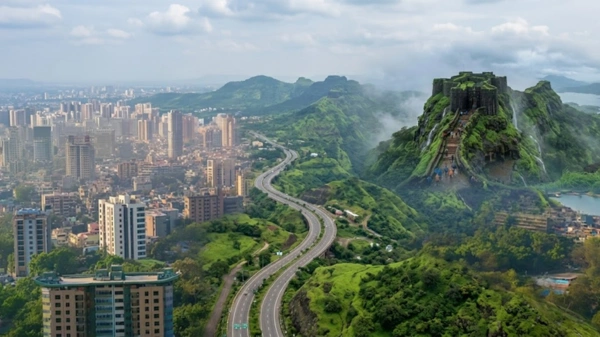
If you’re based in Pune and looking for a weekend escape that doesn’t eat up your whole Saturday, Lohagad Fort is about as close to perfect as it gets. It’s near, it’s easy, it’s historically rich, and on a good monsoon morning, the views alone are worth the drive. This guide covers everything: exact distance, every route option, train and bus details, the trek itself, timings, entry fees, and practical tips for a smooth day trip.
Pune to Lohagad Fort Distance: The Quick Answer
The straight-line distance from Pune to Lohagad Fort is roughly 52 km, but by road — the route most travelers actually drive — the distance works out to approximately 60–65 km, depending on which route and starting point in Pune you use. By car, this translates to about 1.5 to 2 hours of driving time, making it a comfortable half-day or full-day round trip.
Here’s a quick distance snapshot for context:
| From | Distance | Approx. Travel Time |
| Pune city center | 60–65 km | 1.5–2 hours (drive) |
| Mumbai | 95–100 km | 2.5–3 hours (drive) |
| Lonavala | 16–20 km | 30–45 minutes (drive) |
| Malavli railway station | 6 km to Lohagadwadi base | 20–30 min drive /1.5–2 hr walk |
Lohagad Fort itself sits at an elevation of 1,033 meters (3,389 feet) above sea level, in the Mawal taluka of Pune district, near Lonavala. It’s part of a twin-fort system alongside the neighboring Visapur Fort, with both forts connected by a ridge that also separates the Indrayani River basin from the Pavana (Pawna) reservoir basin.
How to Reach Lohagad Fort from Pune
There are three realistic ways to make the journey — by road, by train, or a combination of both. Which one suits you depends on whether you want convenience, a lower budget, or a more immersive trekking experience.
Option 1: By Road (Car or Bike) — The Most Popular Route
The most common route from Pune follows NH 48 (the Mumbai–Pune Highway/Expressway corridor) before branching off toward Malavli and then Lohagadwadi, the base village for the fort.
Typical road trip structure:
- Pune → Take NH 48 toward Lonavala
- Exit toward Malavli / Lohagadwadi
- Park at the designated parking area near Lohagadwadi
- Begin the trek from there
Driving is the preferred option for families, groups traveling with kids or elderly members, and anyone who wants to avoid unnecessary extra walking before the trek itself even starts. Most travelers leave Pune early — around 6:00 to 7:00 AM — to reach the base by mid-morning, avoid the midday heat, and have the whole fort largely to themselves before weekend crowds build up.
A practical note for bikers: the descent from Lohagad toward Malavli is steep and curvy in sections. If you’re riding a bike, avoid excessive use of disc brakes on the way down — the repeated braking on a long, steep decline can cause them to overheat, reducing braking effectiveness. Take it slow.
Option 2: By Train + Local Transport (Budget-Friendly and Scenic)
If you’d rather skip the highway drive, Pune’s suburban rail network makes this trip easy on public transport too.
- Take a local train from Pune to Malavli station (on the Pune–Lonavala suburban line)
- From Malavli, Lohagadwadi (the base village) is about 6 km away
- From the station, you have two choices:
- Take a shared jeep, especially plentiful on weekends, straight to the base
- Walk the 6 km, which takes roughly 1.5 to 2 hours uphill, but lets you pass Bhaja Caves and a seasonal waterfall en route
This train-plus-walk combination is popular with solo trekkers and groups who want to make the journey itself part of the adventure, not just a means to get to the trailhead.
Option 3: Via Lonavala (Good If You’re Combining Multiple Sights)
Many travelers — especially those coming from Mumbai, or those turning this into a 2-day Lonavala-Khandala trip — base themselves in Lonavala first, since it’s only about 16–20 km from Lohagad Fort, roughly a 30–45 minute drive. This works well if you also want to see Bhaja Caves, Visapur Fort, or Pawna Lake in the same trip, since Lonavala functions as a natural hub for all of them.
The Trek: What to Expect Once You Reach the Base
Once you arrive at Lohagadwadi (whether by car, jeep, or on foot), the actual climb to the fort begins.
Trek difficulty: Easy, and genuinely beginner-friendly — this is one of the most recommended first treks for people who’ve never done a hill fort trek before.
Distance and duration: The climb from the base village to the summit covers roughly 4 km, with about 300–350 stone steps along a well-maintained path. Most trekkers take 45 minutes to 1 hour to reach the top at a comfortable pace.
Time to explore the fort once at the top: Budget an additional 1.5 to 2 hours to walk the fort’s grounds, see the four main gateways, and reach the famous Vinchu Kata — a narrow, scorpion-tail-shaped rock ridge that’s the fort’s most photographed feature. Altogether, plan for roughly 3 hours total between the climb, exploring, and photo stops, though many visitors happily linger longer just enjoying the breeze and the view over Pawna Lake.
What you’ll see along the way:
- Troops of monkeys near the base steps (harmless but don’t feed them or leave food exposed)
- Sweeping views of Pawna Lake and the surrounding Sahyadri hills
- The twin fort, Visapur, visible across the connecting ridge
- Ancient rock-cut caves near Lohgadwadi village — one of which contains a 1st–2nd century BC inscription in Prakrit-influenced Sanskrit, written in Brahmi script, discovered by a group of trekkers in September 2019 and later studied by researchers at Deccan College
Best Time to Visit Lohagad Fort
- Monsoon (June–September): Widely considered the best season. The hills turn vividly green, the fort’s old water cisterns fill up, mist rolls across the Vinchu Kata ridge, and a seasonal “reverse waterfall” effect appears in a few spots, where wind pushes falling water back upward. Note: steps and rocky patches get slippery, so wear proper trekking shoes with grip, never sandals or chappals.
- Winter (October–February): Clear skies, comfortable temperatures, and full uninterrupted views of Pawna Lake and neighboring forts. A great option if you specifically want unobstructed photography.
- Summer (March–May): Doable, but hot and largely shade-free on the open climb. If you go in summer, start very early in the morning to avoid peak heat.
Fort History, Briefly
Lohagad — meaning “Iron Fort” in Marathi — has a long and layered history. It changed hands across several dynasties, including the Satavahanas, Chalukyas, Rashtrakutas, and Yadavas, before rising to real strategic importance under the Maratha Empire. Chhatrapati Shivaji Maharaj captured the fort in 1648, lost it briefly to the Mughals under the 1665 Treaty of Purandar, and the Marathas recaptured it in 1670, after which it was used to store treasury wealth. Today it’s a protected monument and one of the most visited hill forts near Pune.
Practical Trip Essentials
Entry fee: Lohagad Fort has no ticketed entry fee — it’s free and open to the public daily.
Ideal start time: Leave Pune between 6:00–7:00 AM to reach the base by mid-morning and complete the trek before the afternoon heat and weekend crowds peak.
What to carry:
- At least 2 liters of water per person
- Ready-to-eat snacks (biscuits, energy bars) for the climb
- A lightweight backpack (not a single-shoulder bag) to distribute weight evenly
- Proper sports/trekking shoes — never sandals or flip-flops, especially in monsoon
- A cap or hat for sun protection
- A light raincoat or poncho if visiting in monsoon season
Parking: Designated parking is available near the base at Lohagadwadi for those arriving by private vehicle.
Combine it with: Since Lohagad is a relatively short trek, many visitors club it with a same-day visit to Visapur Fort (the taller twin fort next door) or a stop at Bhaja Caves, an ancient Buddhist rock-cut cave complex along the walking route from Malavli.
Sample One-Day Itinerary from Pune
- 6:00 AM – Depart Pune via NH 48 toward Malavli/Lohagadwadi
- 8:00–8:30 AM – Arrive at base, quick breakfast (local stalls often sell pakodas and snacks)
- 8:30–9:30 AM – Trek up to the fort (45 min–1 hr)
- 9:30–11:30 AM – Explore the fort, Vinchu Kata ridge, photo stops
- 11:30 AM–12:30 PM – Descend back to the base
- 12:30–1:00 PM – Lunch/snacks at base stalls
- 1:00 PM onward – Optional detour to Bhaja Caves or Visapur Fort, or head back to Pune
Final Takeaway
At roughly 60–65 km and under two hours by road, Lohagad Fort is one of the easiest and most rewarding day trips available from Pune. It doesn’t demand serious trekking experience, it doesn’t cost anything to enter, and it delivers real history alongside some of the best monsoon views in the Sahyadris. Whether you drive straight to the base or take the more scenic train-and-walk route via Malavli, it’s a trip that fits comfortably into a single day without feeling rushed.
FAQs
What is the distance from Pune to Lohagad Fort?
The distance from Pune to Lohagad Fort is approximately 65–70 km by road, depending on your starting point and the route you take. The journey usually takes 1.5 to 2.5 hours by car or bike.
What is the best way to reach Lohagad Fort from Pune?
You can reach Lohagad Fort by car, bike, train, or bus. Driving via the Mumbai–Pune Expressway or NH48 is the fastest option. Alternatively, take a train to Malavli Railway Station, which is the nearest station, and then travel about 5–6 km to the fort base by auto-rickshaw or on foot.
Is Lohagad Fort suitable for beginners?
Yes. Lohagad Fort is considered one of the best trekking destinations for beginners. The trail is well-marked, the climb is moderate, and stone steps make the ascent relatively easy for families and first-time trekkers.
Which is the best time to visit Lohagad Fort?
The monsoon season (June to September) is the most popular time to visit Lohagad Fort because the surrounding hills turn lush green and waterfalls enhance the scenery. Winter (October to February) is also ideal for pleasant weather and comfortable trekking.
How much trekking is required to reach Lohagad Fort?
From the parking area near Lohagadwadi village, the trek is approximately 1.5–2 km and usually takes 30–45 minutes, depending on your pace.
What are the nearby attractions around Lohagad Fort?
Popular attractions near Lohagad Fort include Visapur Fort, Bhaja Caves, Karla Caves, Pawna Lake, and Lonavala, making it easy to combine multiple destinations in one trip.
